
Bloat, also known as gastric dilatation-volvulus (GDV), is a serious medical condition in dogs where the stomach fills with gas, food, or fluid, leading to a potentially life-threatening situation. Without treatment, in only an hour or two, your dog will likely go into shock. The heart rate will rise and the pulse will get weaker, leading to death.
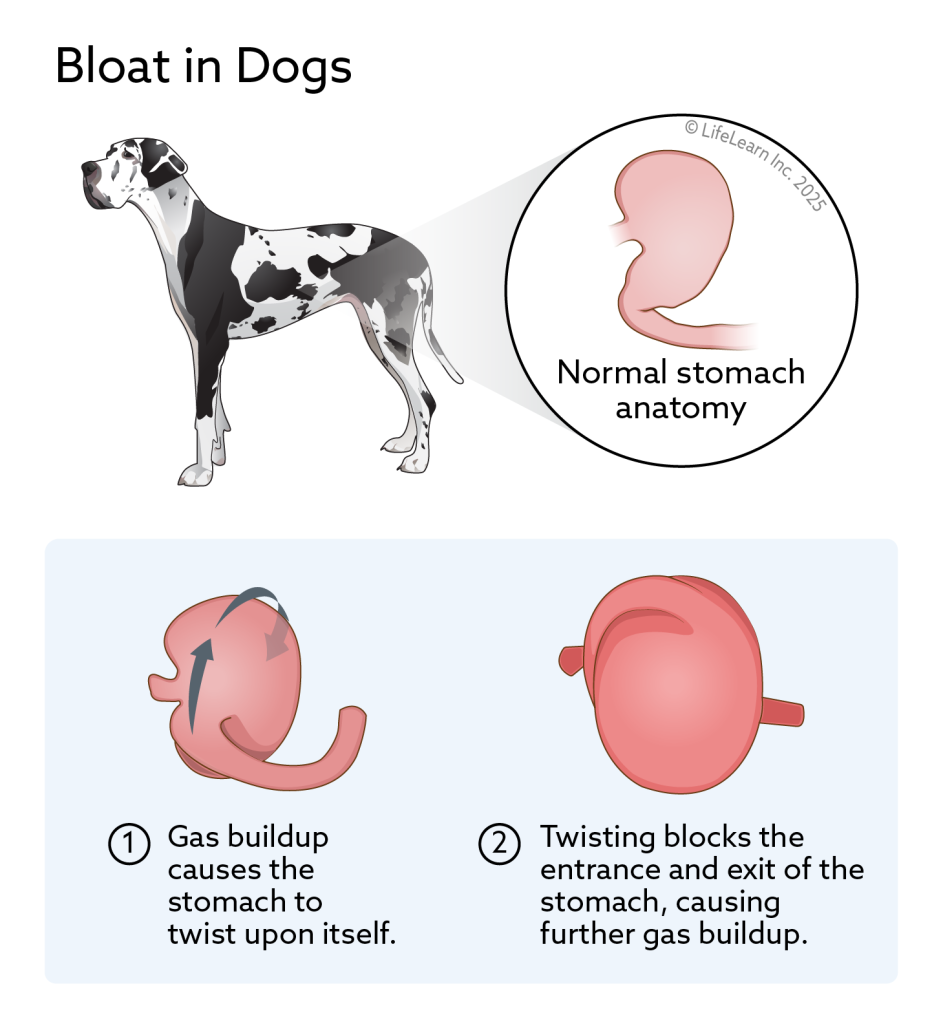
Understanding Bloat
Bloat occurs when a dog’s stomach expands due to the accumulation of gas, food, or fluid. This condition can lead to the stomach twisting (volvulus), which cuts off blood flow to the stomach and other organs, potentially resulting in shock and death if not treated promptly.
Why Do Dogs Bloat?
This question has perplexed veterinarians since they first identified the disease. We know air accumulates in the stomach (dilatation), and the stomach twists (the volvulus part). We don’t know if the air builds up and causes the twist, or if the stomach twists and then the air builds up.
Symptoms of Bloat
Signs that your dog may be experiencing bloat include:
- Unproductive retching: Attempting to vomit without producing anything, or only producing small amounts of white foam.
- Abdominal distension: A visibly swollen or hard abdomen.
- Gentle tapping of the swelling just behind the last rib often produces hollow, drum-like sounds.
- Rapid breathing: Difficulty breathing or increased heart rate.
- Restlessness: Inability to find a comfortable position, pacing, or whining.
- Lethargy: Your normally active dog suddenly becomes inactive, lethargic, unwilling or difficult to walk. May drag paws.
- Collapse: In severe cases, the dog may collapse due to shock.
Causes and Risk Factors
While the exact cause of bloat is not fully understood, several factors can increase a
dog’s risk, including:
- Eating too quickly: Dogs that gobble their food may be more prone to bloat.
- Large or deep-chested breeds: Breeds such as Great Danes, German Shepherds, Dobermans, and Mastiffs are at higher risk.
- Age and genetics: Older dogs and those with a family history of bloat may be more susceptible.
- Males are twice as likely to bloat as females. Neutering or spaying has no effect on risk.
- Highly Stressful Situations / Environments: Being under duress, being in a highly stressful environment.
- Having a fearful, anxious, or nervous temperament
- Having a history of aggression towards people or other animals
- Being thin or underweight

How Is Bloat Treated?
Veterinarians start by treating the shock. Once the dog is stable, he’s taken into surgery. We do two procedures. One is to deflate the stomach and turn it back to its correct position. If the stomach wall is damaged, that piece is removed. Second, because up to 90 percent of affected dogs will have this condition again, we tack the stomach to the abdominal wall (a procedure called a gastropexy) to prevent it from twisting.
To help prevent bloat, consider the following strategies:
Tacking (gastropexy) the stomach as a preventative is a great option. If spaying or neutering or any other reason for surgery, ask your veterinarian about performing a gastropexy. Some veterinarians now do this procedure laparoscopically to reduce the invasiveness. Consult your veterinarian about this option.
Dogs fed one meal a day are twice as likely to bloat as those fed two meals a day. Feed smaller, more frequent meals: This can help reduce the risk of rapid eating and gas accumulation.
Use slow feeders: Special bowls designed to slow down eating can be beneficial. Rate of eating is also a contributor. Fast eaters have five times the risk than dogs that are slow eaters.
Avoid vigorous exercise after meals: Allow your dog to rest after eating to minimize the risk of bloat.
If a dog has relatives (parents, siblings, or offspring) who have suffered from bloat, there is a higher chance he will develop bloat. These dogs should not be used for breeding.
Understanding bloat and recognizing its symptoms can be crucial in ensuring your dog’s
health and safety. If you suspect your dog is experiencing bloat, seek veterinary care
immediately. This is truly an emergency, and it is of upmost importance to see a
veterinarian immediately.
Sources: American Kennel Club, WebMed, PetMed, Rover, FirstVet, VCA Hospitals, My
Dog’s Symptoms


Comments are closed